
6 Properties of Gypsum Plaster: Why It’s the #1 Choice for Modern Construction
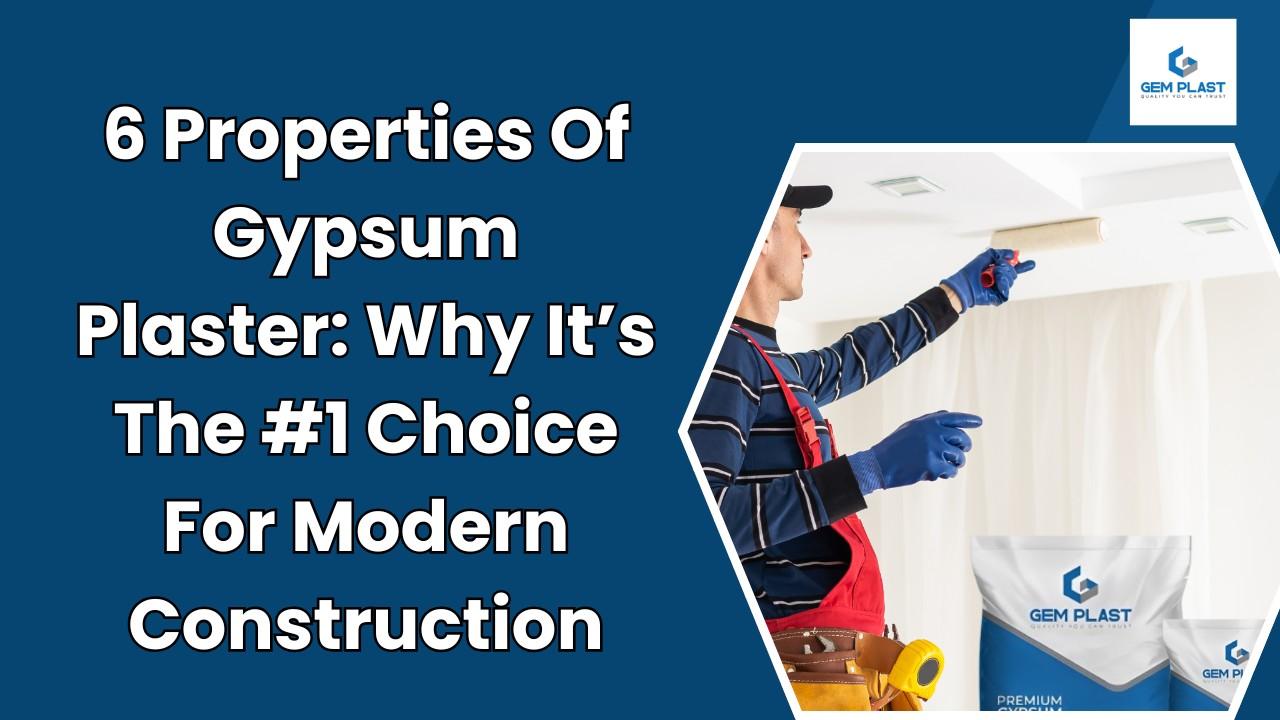
Gypsum plaster is basically a wall finishing material made from dehydrating the mineral gypsum at a specific temperature. The main Properties of gypsum plaster are its fire resistance and durability. There are numerous amount of different plasters available in today’s market but gypsum plaster’s quick setting time and high durability make it superior to others. In this blog we are going to discuss the key properties of gypsum plaster and its application method.
What is gypsum plaster?
It’s basically a binding material used for walls, replacing the traditional cement. It is a white coloured cementing material made by crushing and grinding the gypsum rock, then heating it to around 120 degrees C., and this dried gypsum powder is mixed with water to make it hardened. The Gypsum plaster can be applied over concrete, bricks or blocks to create a smooth finishing surface.
To use gypsum plaster, it doesn’t require any additional sand. Only some water is needed. The properties of gypsum plaster gives the walls a smooth interior finish and is ideal for paintings. Unlike cement, it can be applied over any surface, whether rough or smooth. The properties of gypsum plaster prevent cracking and peeling off gives the wall long-lasting protection.
Properties of Gypsum Plaster
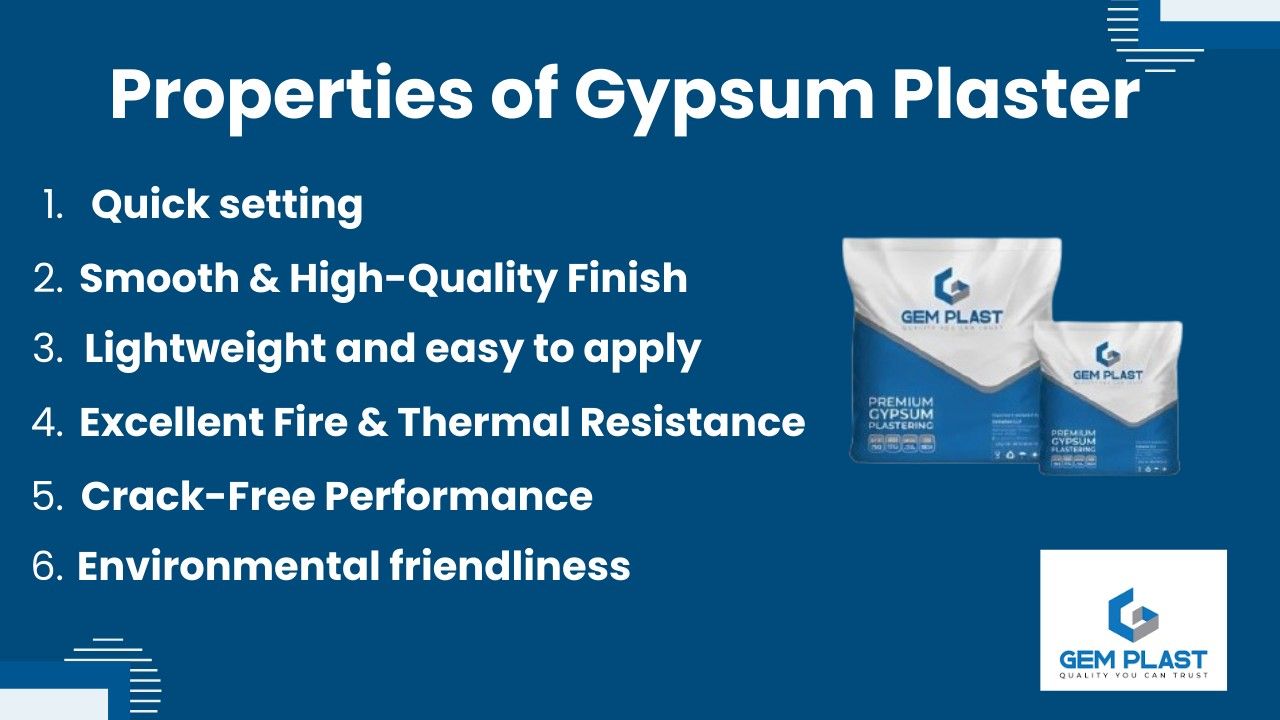
These are the key 6 properties of gypsum plaster that make it superior to cement.
- Quick Setting
- Smooth & High-Quality Finish
- Lightweight and easy to apply
- Excellent Fire & Thermal Resistance
- Crack-Free Performance
- Environmental friendliness
1. Quick setting
The setting time of gypsum plaster is one of the key properties of gypsum plaster, which makes gypsum superior when comparing the cement plaster vs gypsum plaster debate in construction. It can be set under 20-25 minutes. This ability allows for starting painting preparation fast. This rapid setting is due to gypsum’s natural crystallization process.
2. Smooth & High-Quality Finish
Gypsum plaster’s texture makes it workable and increases productivity. One of the main properties of gypsum plaster is its smoothness, it doesn’t need any putty, sand grains, giving you a smooth finish and making the wall ready for painting.
3. Lightweight and easy to apply
It’s significantly lighter than cement plaster, which improves durability and performance. And also make it easy to apply.
4. Excellent Fire & Thermal Resistance
Gypsum contains 21% chemically bound water. During fire Exposure, the water evaporates and delays the heat barrier, making it ideal for fire-rated partitions. The main advantage of gypsum plaster is its low thermal conductivity and sound isolation, making it perfect for hotel, office, and home interiors.
5. Crack-Free Performance
The main properties of Gypsum plaster are known for being shrinkage-free because its bonding is strong and stable and lightweight so less stress on the substance. Thus, walls remain crack-free and stable for years.
6. Environmental friendliness
Gypsum plaster is considered a green building material. Because of gypsum plaster’s smooth and white finish, gypsum plaster is perfect for Acrylic paints, Emulsion paints, Distemper, Wallpapers, and Textures. These unique characteristics make it a superior interior wall and ceiling plaster compared to cement plaster.
Thickness of Gypsum Plaster
If you want to have all the advantages of properties of gypsum plaster, the recommended gypsum plaster thickness while applying is around 6-29 mm, for walls it’s around 8mm, and for the ceiling it’s a minimum of 2mm. Basically applying a minimum of 6mm thickness is ideal for avoiding cracks. Different surfaces require different thicknesses. If the plaster is too thin, it will cause cracks, surface defects and poor finishing. There are numerous tools used for ensuring the gypsum thickness, such as an aluminium straight edge, a Spirit level, and Thickness checking pins.
7 Steps for Applying Gypsum Plaster
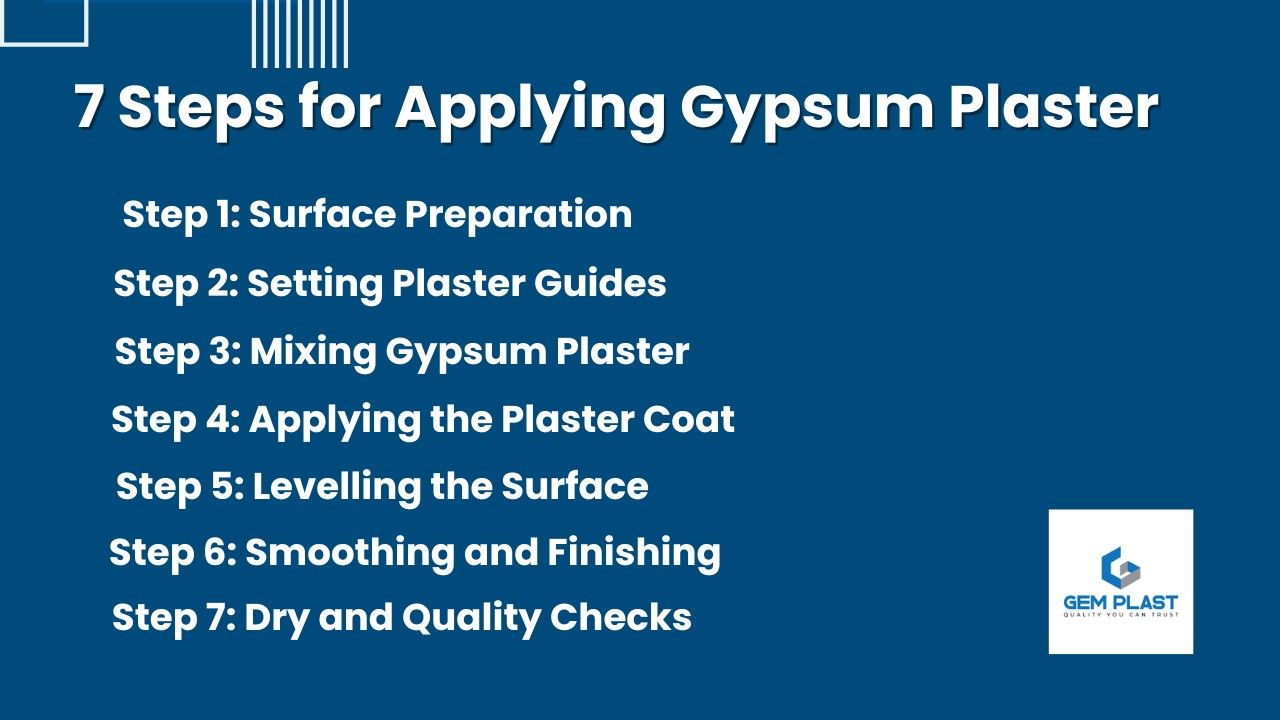
Applying gypsum plaster is a simple yet highly effective method to achieve smooth, durable, and crack-free walls. With the right surface preparation, proper mixing and skilled application, properties of gypsum plaster deliver a premium finish faster than traditional cement plaster.
- Surface preparation
- Setting Plaster Guides
- Mixing Gypsum Plaster
- Applying the Plaster Coat
- Levelling the Surface
- Smoothing and Finishing
- Dry and Quality Checks
Step 1:- Surface Preparation
A clean surface will give maximum bonding. Before applying, make sure to remove things like
Dust, oil, grease and loose paint. Scrap off weak portions and make sure the surface is dry.
Gypsum doesn’t bond naturally with smooth concrete walls.
Apply: Acrylic bonding agent, Polymeric bond coat, Specialized products and let it dry for 2-4 hours.
Step 2:- Setting Plaster Guides
Install plaster dots on the walls for mark thickness, and create vertical and horizontal screeds. Check the wall thickness using tools like a plumb bob, spirit level or laser level. These tools will ensure that the wall’s surface is straight.
Step 3:- Mixing Gypsum Plaster
When mixing gypsum plaster, measure powder and water accurately. The ideal ratio is 0.7 litres of water per 1 kg of gypsum powder. When mixing gypsum adding water to plaster is one of the common mistakes. Always sprinkle plaster into the water, or it will make large air bubbles and lumps. Electric mixing tools are usually used for a large area to get a uniform mixture and manual mixing for small areas. Let it rest for 1-2 minutes before final mixing, work within the pot life for 10- 20 minutes, and make sure never to mix too much at once.
Step 4:- Applying the Plaster Coat
When applying the plaster coat start from the top and move downwards, never reverse it will prevent the coat from dripping and uneven patches. After applying the coat spread the plaster firmly using a steel trowel, push the frame firmly to the surface and fill between the screen guides. Maintain uniform thickness to avoid cracks. Work continuously to avoid cold joints.
Step 5:- Levelling the Surface
Level the surface using Darby and move it in a zig-zag motion, and pull excess plaster outward. Fill the low spots first, where straight edges don’t touch, and finally double-check with a laser to make sure there are no dips or bumps.
Step 6:- Smoothing and Finishing
Once the plaster setting begins (under 5-15 minutes), re-level the plaster with a trowel lightly. This will compact the plaster and increase its strength. For small imperfections, use a wet sponge. When the final plaster is 70-80% set do a final trowel pass as a finishing touch to get a polished glass glass-smooth finish and no additional putty is required. Gypsum plaster gives a ready-to-paint finish.
Step 7:- Dry and Quality Checks
Unlike cement plaster, gypsum does not require water curing; it dries naturally. Allow at least 48 hours drying. Ideal paint application time is up to 3-5 days. Inspect the evenness and smoothness of the wall using hand touch feel or flashing the light at an angle. Finally checks for any defects like cracks, hollow points, etc…
Conclusion
Gypsum plastering is a modern, highly efficient properties of gypsum plaster uses replaces traditional cement plaster, offering superior quality, fast and easy application with long-term performance, all thanks to the excellent properties of gypsum plaster. Whether it’s offices, homes or commercial interiors. This ancient method proves time and time again that gypsum plastering is the superior method for plastering.
FAQ
1. Is gypsum plaster durable for long-term use?
Yes. Gypsum plaster is highly durable, it does not develop cracks over time like traditional cement plaster. Its strong bond with the lightweight nature and resistance to impact make it suitable for long-term performance. When applied properly, gypsum plaster can last long decades without any major maintenance.
2. Is gypsum plaster can be applied to any areas of a building?
Gypsum plaster is ideal for interior walls and ceilings but it is not recommended for areas with contain constant moisture, such as bathrooms, exterior walls, wet basements or places with direct water exposure.
3. How long does gypsum plaster take to dry and become ready for painting?
Gypsum plaster sets within 20–25 minutes, but full drying depends on the room’s temperature and ventilation. Generally, the plaster becomes ready for painting within 48–72 hours. Unlike cement plaster, gypsum does not require curing, which significantly speeds up the finishing process.