
Lime Plaster vs Gypsum Plaster: Which Is Better for Home Construction?
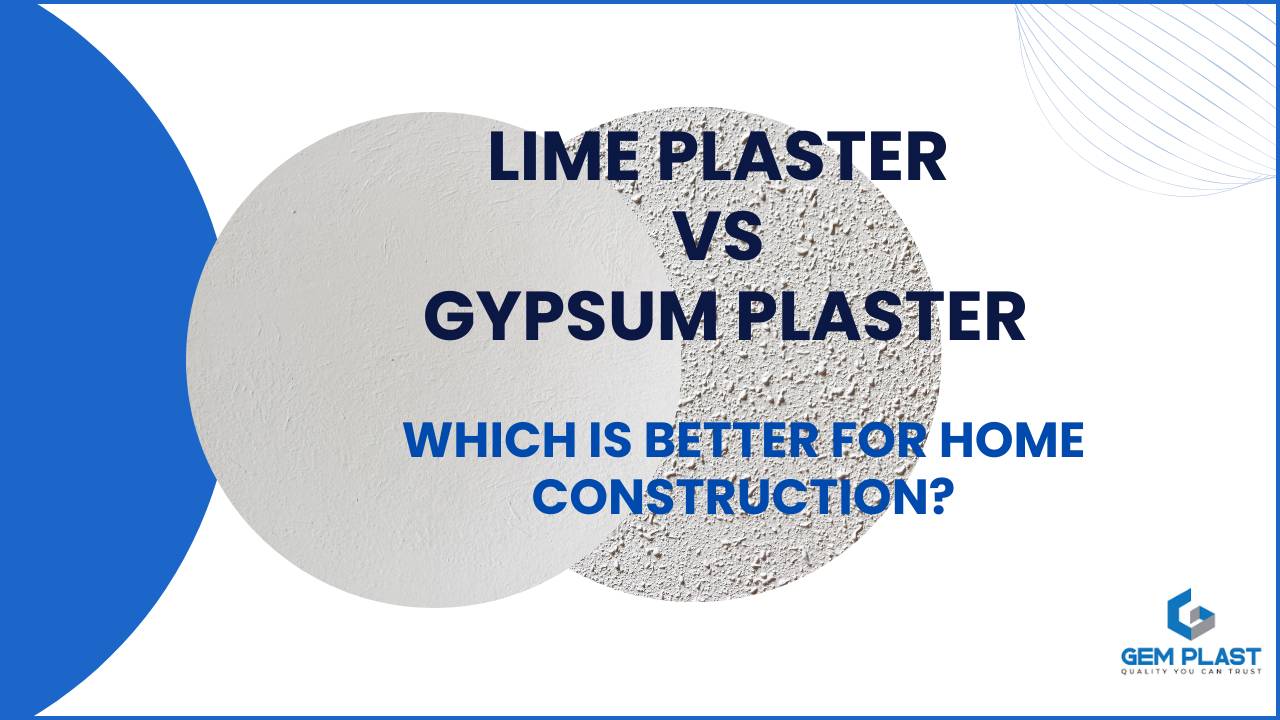
Modern home construction looks for the right plaster to get comfort, better durability, and long-term performance. That’s why it is important to compare lime plaster vs gypsum plaster. Builders, architects, or even some of the homeowners often compare to understand which option works best for each requirement. There are certain difference between lime and gypsum plaster. Some people prefer lime plaster because of its natural and breathable properties and also its natural composition, while others prefer gypsum plaster due to its smooth surface and fast-setting properties. We know that walls play a major role in any construction, but nowadays, along with their strength, people also look for comfort, aesthetics, and even long-term performance. In this blog, let us analyze lime plaster vs gypsum plaster to understand the meaning behind wall plastering.
An Overview of Lime Plaster vs Gypsum Plaster
What Is Gypsum Plaster?
Gypsum plaster is a material used for interior works in any construction, mostly home-based, that is made of gypsum, which is a naturally found mineral. Gypsum is first melted to eliminate moisture before grinding into fine powder. This powder is then mixed with water to form an extremely hard and durable paste. This gives a smooth finish to the wall or ceiling, making it more beautiful. Gypsum plaster uses are now popular in commercial as well as in residential structures due to its speedy installation and the high-quality finishing.
Advantages of Gypsum Plaster
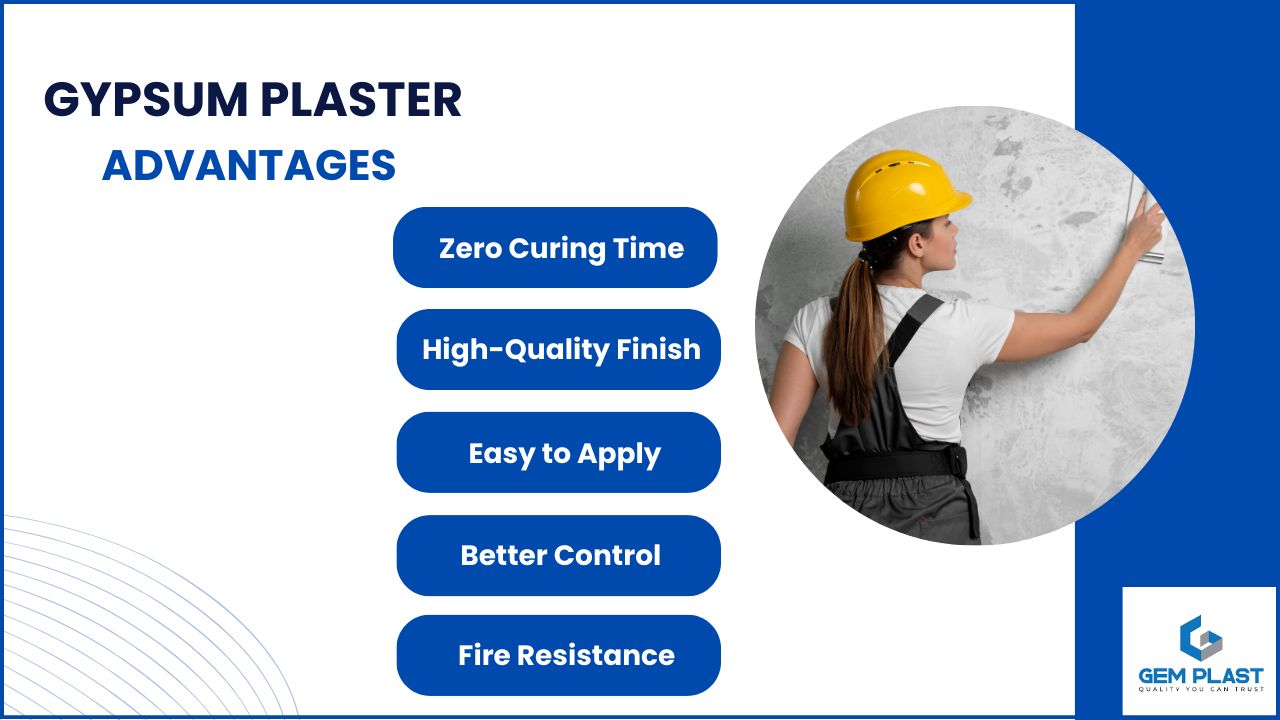
1. Zero Curing Time
As gypsum plaster is lighter than lime plasters in weight, it is easier to spread over walls and ceilings. This quality also helps in reducing the overall load on building structures.
The standard gypsum plaster thickness ranges between 10–20mm. This range ensures a uniform leveling of walls. This consistency in gypsum plaster thickness helps achieve a neat, even surface throughout the room.
The natural fire-resistant properties of gypsum gives an additional layer of safety in homes and commercial buildings.
What Is Lime Plaster?
Lime plaster is one of the oldest and traditional plastering method where lime, water, and sand are mixed together to form a natural wall finishing material. This technique has been in use for centuries across different architectural styles due to its high durability and breathability. Lime plaster has a slow curing process. Here, lime absorbs carbon dioxide from the air and increases its strength gradually over time. This unique characteristic allows lime plaster to become more robust as it ages.
Advantages of Lime Plaster
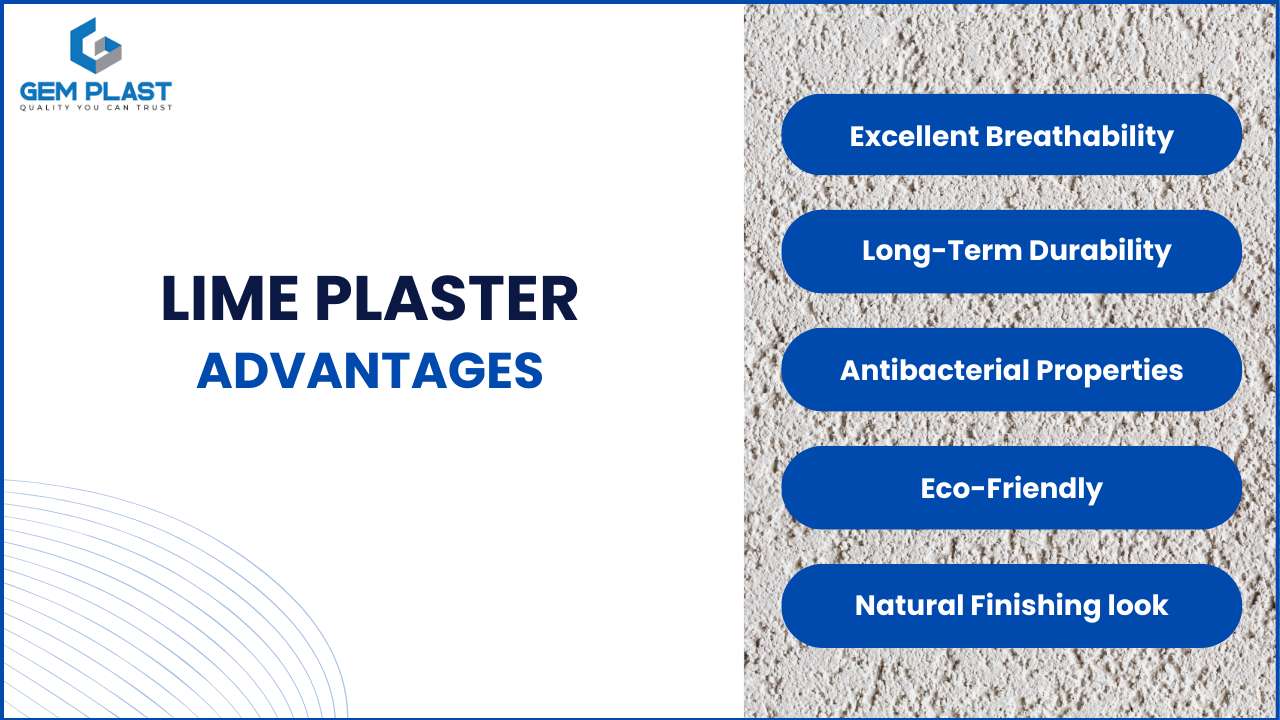
The main advantages of lime plaster include –
1. Excellent Breathability
Lime plaster allows moisture in it to pass through walls, instead of absorbing or trapping. This prevents dampness. This makes it suitable for construction in hot and tropical climate.
2. Long-Term Durability
Lime plaster takes time to set. Here, lime hardens over time through a process called carbonation and becomes stronger. This natural process gives a longer lifespan to the walls.
3. Natural Antibacterial Properties
Another advantage is the pH level. Since the pH level of lime is high, it does not allow any bacterial or mold growth.
4. Eco-Friendly
Since lime plaster is made from natural materials, it have the ability to absorb carbon dioxide (CO₂) during curing. This gives eco-friendly and sustainable buildings.
5. Natural Finishing look
Lime plaster provides a natural appearance to the walls or ceilings. The slightly textured look gives a traditional and contemporary architectural style.
Lime Plaster vs Gypsum Plaster: Key Differences
When you compare lime plaster vs gypsum plaster, the difference will be clear right from their composition to their final performance. Both produce excellent results based on the purpose for which they are used.
1. Composition
Lime plaster is composed of natural materials, making it extremely breathable. Its composition consists of lime as well as sand, and water, which makes it green. On the other hand, gypsum plaster is produced by heating gypsum, which helps in removing moisture. Then these are ground to a fine powder. Lime takes time to strengthen, but gypsum provides instant strength.
2. Curing Time
Gypsum plaster has zero curing time, so it sets very quickly, allowing projects to finish much faster. But lime plaster cures slowly through carbonation. This may take days or sometimes even weeks to develop full strength. This slow-setting nature gives lime the advantage of long-term durability.
3. Moisture Absorption
Another difference between lime and gypsum plaster is that lime plaster allows moisture in it to pass through the walls, instead of absorbing or trapping it. This prevents dampness. But gypsum plaster reacts to moisture, where it can weaken if exposed to damp conditions.
4. Appearance or Finishing
Gypsum plaster gives a smooth texture, making interior works and paint look flawless. Lime plaster offers a natural but slightly textured finish that looks earthy and more natural. As gypsum is a more modern design, lime plaster looks like traditional and eco-friendly home styles.
5. Strength and Long-Term Durability
The setting time for gypsum plaster is very quick, hence, there is no guarantee that it will last for a long time without breaking. Lime plaster takes time to set and hence becomes stronger over time. This process gives a longer lifespan to the walls, which also reduces cracks.
6. Sustainability
Since lime plaster has natural found materials, it is able to absorb carbon dioxide (CO2) while curing. This creates sustainable structures. Gypsum plaster has a greater environmental impact than lime because the latter is more processed by industrial processes. For green building projects, lime is the preferred choice, while gypsum is chosen for its appearance mainly.
Which Is Better for Home Construction? - Lime Plaster vs Gypsum Plaster
The difference between lime and gypsum plaster depends on many factors- climate, construction style of the structure, whether it is a home or another building, and long-term plans. If the homeowners are looking for a natural look, more like an eco-friendly wall or ceiling, they should go for lime plastering. Because it can control dampness, which is suitable for humid and tropical environments.
Lime plaster is also durable and will continue to increase its strength over time, which makes it suitable for traditional styles of architecture. However, gypsum plaster is the preferred option if you are looking for a faster installation. The gypsum plaster thickness, its smooth texture give an elegant finish to the interior works. Builders often choose gypsum because it saves time, which is a major advantage supporting quick painting.
If you look at the difference between lime and gypsum plaster, we can see that the latter is mainly suitable for residential buildings like houses, apartments, etc, and commercial spaces where they need a modern look with less time. If you are looking for a plaster that lasts longer, you need to go for lime plaster. But if you need a budget-friendly plastering option in less time, you should consider gypsum plaster.
In short, when you compare lime plaster vs gypsum plaster, the choice depends on what you are looking for- Contrary to all these, nowadays you can see many builders combine both materials: That is, using lime plaster for external areas that are mainly moisture-prone areas and using gypsum plaster for interiors. This balanced approach guarantees durability as well as gives a beautiful appearance.
Conclusion
Both lime and gypsum play important role in modern day construction. Comparing lime plaster vs gypsum plaster is crucial since each one has distinct advantages. Lime plaster is organic as well as breathable and durable, which is ideal for climate-sensitive and eco-friendly homes. On the other hand, gypsum plaster thickness its ability to set easily, which makes it ideal for modern interiors and quick construction.
We need to understand these benefits so that when it comes to construction, we can easily choose the best option accordingly. We know that walls play a major role in any construction, but nowadays, along with their strength, people also look for comfort, appearance, and long-term performance. By choosing the best materials for plastering, your home will not only appear beautiful but will also be durable and comfortable for a long time to come.
FAQ
1. What is the main difference between lime plaster and gypsum plaster?
Zero curing time of gypsum plaster leads to a faster setting time where as lime plaster needs more time to set.
2. What is gypsum plaster used for?
Gypsum plaster is commonly used for smooth finishing interior works mainly- ceilings and walls.
3. Which one of these is expensive in lime plaster vs gypsum plaster?
Lime plaster is usually expensive as it takes time to set and requires labor.
4. Which plaster offers a smoother finish?
Gypsum plaster provides a smooth and appealing that is paint-ready finish.
5. Which plaster controls moisture better?
Lime plaster performs better in moisture regulation.