
Gypsum Plaster vs Cement Plaster: A Clear & Practical Guide for Home Construction
What is gypsum plaster?
Gypsum plastering is a ready-mix wall finishing solution commonly used for interior walls and ceiling purposes. Gypsum plastering is a natural composition of gypsum and is mixed with water in a preparation stage, making wall finishing very simple and quick. Unlike traditional cement plastering, gypsum plastering does not require water curing, making construction work faster and less cumbersome. Gypsum plaster is also considered the most sought-after wall finishing solution due to its smooth finish. Gypsum plastering on walls takes 24 to 48 hours for painting, thereby shortening construction time. Gypsum plastering also reduces wall cracks and provides a smooth surface, making wall putty application unnecessary
What is Cement Plaster?
Cement plaster is a traditional wall finishing material made by mixing cement, sand, and water at the construction site. It has been extensively used numerous times in both domestic and marketable structures because of its strength and continuity. Builders trust it is substantially for areas that need long- term performance and humidity resistance. The application of cement plaster takes further time compared to gypsum plaster, as it requires proper water curing for several days to gain strength. While the surface finish is slightly rough, it provides a solid base and is suitable for further treatments like wall putty and paint.
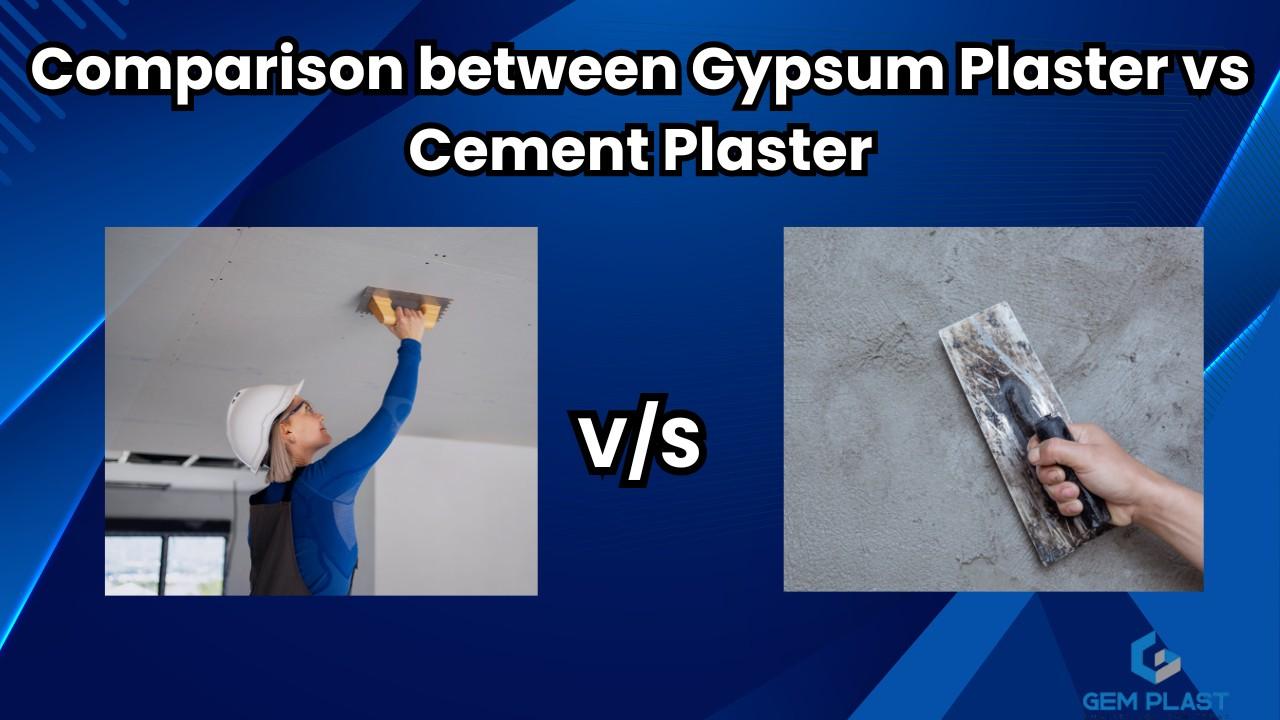
Comparison between Gypsum Plaster vs Cement Plaster
1.Material Composition
The main difference between gypsum plaster and cement plaster is material composition. Gypsum plaster is made from natural gypsum and comes as a factory processed ready mix material. Cement plaster is made on site using sand, cement, and water.
2.Application process
Gypsum plaster is relatively quick and easy to apply; it only has to be mixed with water before application. This leads to a cleaner application and more efficient use of labour. Cement plaster requires careful on-site mixing and skilled labour to ensure proper bonding and strength.
3.Drying And Setting Time
Another difference between gypsum plaster and cement plasteris in its setting time. Gypsum plaster sets very fast and usually dries within 24 to 48 hours without the need for water curing. Cement plaster takes much longer, as it needs regular water curing for about 7 to 14 days to achieve proper strength.
4.Surface Finish
Gypsum plaster provides a smooth, even, and paint-ready finish, which reduces the need for wall putty. Cement plaster gives a comparatively rough surface and usually requires additional finishing work before painting.
5.Cost Comparison
Another difference between gypsum plaster and cement plaster is inits cost. Gypsum plaster is more expensive, but it is more cost-effective due to less time spent on labor, curing, and finishing work. On the other hand, cement plaster is cheaper to use in material cost, but overall expenses can be greater because of increased labor and curing time.
6.Durability & Strength
For interior walls, gypsum plaster is more durable and performs sufficiently under normal indoor conditions. Cement plaster, however, is more suitable for both interior and exterior use as it offers more long-lasting durability and strength.
7.Maintenance & Cracks
Maintenance & cracks is one of the difference between gypsum plaster and cement plaster. Gypsum plaster is less prone to cracks because of its controlled manufacturing process and requires minimal maintenance when used in dry areas. Cement plaster may develop cracks over time if curing is not done properly and may require more maintenance.
Why is Gypsum plaster better than cement Plaster?
1.Reduce plastering time
Gypsum plaster needs less time compared to cement plaster. Gypsum plaster significantly reduces plastering time because it sets quickly and doesn’t require water curing. Once applied, the surface generally dries within 24 to 48 hours, allowing painting and other finishing work to begin sooner. This makes gypsum plaster a practical choice for systems where fast completion is important.
2.Reduces Plastering Cost
Although gypsum plaster may have a slightly higher material cost, it helps reduce overall plastering charges. The faster application process lowers labour costs, and the smooth finish minimizes the need for fresh wall putty. Savings in time, labour, and finishing materials frequently balance the original cost.
3.Smooth Finish
One of the biggest advantages of gypsum plaster is the smooth finish it provides. The surface looks clean and invariant, which improves the final appearance of interior walls. Because of this smooth finish, walls are frequently ready for direct painting without extra surface preparation.
4.Less Cracks
Gypsum plaster is less prone to cracks because it’s factory- processed and has a controlled composition. Unlike cement plaster, it doesn’t shrink during curing, which helps maintain a stable surface over time. When applied rightly in dry areas, it remains crack-free for a time.
5.Better for Interiors
Gypsum plaster is especially well- suited for interior walls and ceilings where humidity situations are low. Its featherlight nature, clean application, and high- quality finish make it a favored choice for ultramodern homes, apartments, and office interiors. still, it isn’t recommended for wet areas such as bathrooms or kitchens.
Conclusion
Choosing between gypsum plaster and cement plaster depends mainly on where and how you plan to use it. There are many types of plastering, When you compare gypsum plaster vs cement plaster, gypsum plaster clearly stands out for interior walls because of its faster application, smooth finish, and lower chances of cracks. It helps save time, reduces finishing work, and gives your interiors a clean, modern look. Cement plaster still plays an important role in areas exposed to moisture and weather conditions. Understanding the real difference between gypsum plaster and cement plaster will help you make the right choice for long-lasting results and better overall construction quality.
FAQ
1. Which plaster is better for interior walls?
Gypsum plaster is ideal for interior walls due to its smooth finish and quick-setting properties, making it perfect for painting.
2. What is the main difference between gypsum plaster and cement plaster ?
Gypsum plaster is a ready-mix material that dries quickly and does not require curing, while cement plaster is mixed on site and needs water curing for proper strength.
3. Which plaster do builders prefer today?
Builders prefer gypsum plaster for fast interior projects and cement plaster for exterior walls and moisture-prone areas.
4. Does gypsum plaster reduce painting costs?
Yes, gypsum plaster provides a smooth finish, which reduces the need for wall putty and lowers painting costs.
5. Is gypsum plaster safe and eco-friendly?
Yes, gypsum plaster is safe, eco-friendly, and generates less construction waste compared to cement plaster.