
How to Use Gypsum Plaster the Right Way
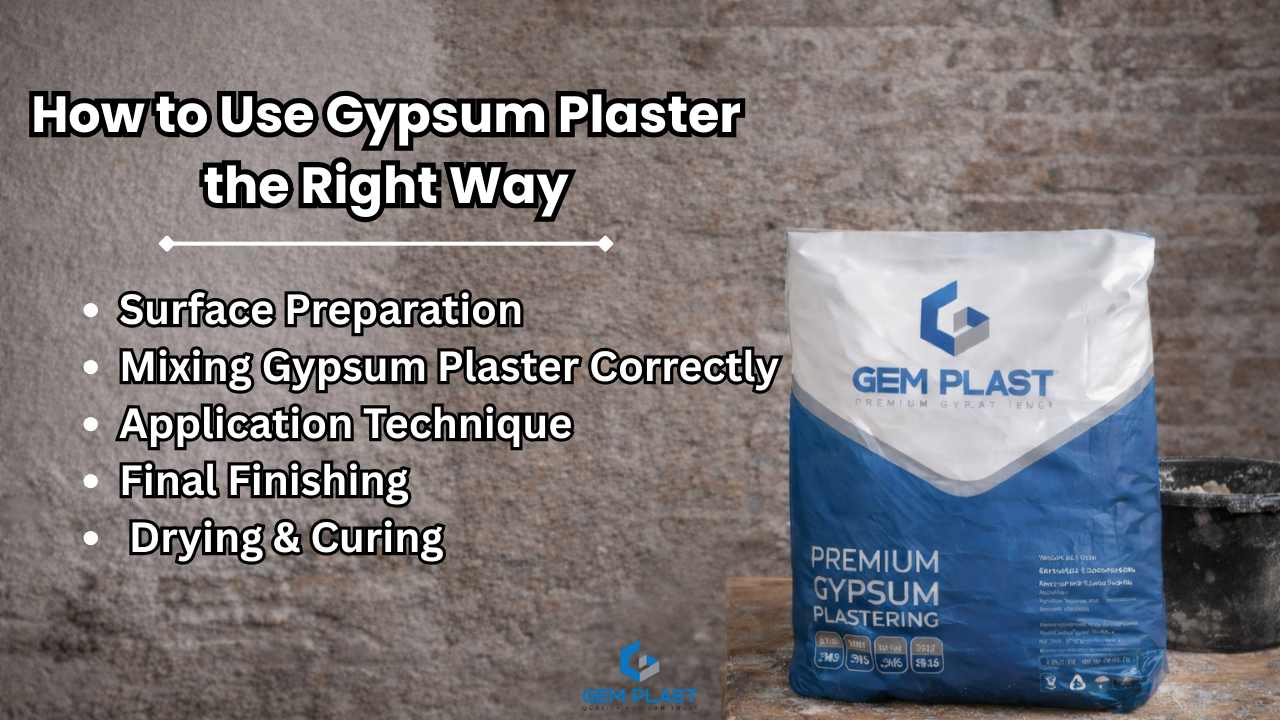
Gypsum plaster has become one of the most popular choices in modern construction because of its smooth finish and quick application. Many people don’t know how to use gypsum plaster correctly, but proper application is essential for a durable and high-quality interior finish. Gypsum is a white cementing material formed by partially or completely dehydrating natural gypsum, and it hardens when mixed with water. It is a ready-to-use material that does not require sand. Many homeowners and builders prefer gypsum plaster walls because they are lightweight, strong, and help achieve a refined interior appearance.
Complete Step-by-Step Method for Applying Gypsum Plaster
Step 1 – Surface Preparation
Surface preparation is the first and most important step in understanding how to use gypsum plaster effectively. Start by removing all dust and loose particles so the plaster bonds properly to the surface. Lightly dampen the wall to help the plaster spread evenly, then check for any uneven areas and repair them in advance to achieve clean, strong gypsum plaster walls. Proper surface preparation plays a key role in achieving a smooth and long-lasting final finish.
Step 2 – Mixing Gypsum Plaster Correctly
To achieve a clean and durable result of your gypsum plastering work, it is necessary that you use the correct water-to-plaster ratio so that the mixture is smooth and can be applied easily. While mixing plaster, it is better to add plaster to water, do it in small portions, and mix gently so that no lumps are formed. It is worth noting that, because gypsum hardens very fast, it is quite important to use the plaster-water mixture as soon as it gets a little thicker. Proper mixing of gypsum plaster will help to make the surface look smooth and of high quality.
Step 3 – Application Technique
Start by applying a thin, even first coat on the wall. Level the surface with a trowel to remove bumps or excess plaster. Smooth the wall with long, steady strokes for a polished finish. Using the correct technique ensures strong adhesion and durability. This process also highlights the main advantages of gypsum plaster, like smoothness and quick setting.
Step 4 – Final Finishing
Final finishing gives your walls a polished, professional look. Use the right troweling techniques to smooth out bumps and marks. Aim for a mirror-like finish for clean, shiny walls. Timing is key—finish while the plaster is slightly wet. This is the proper way to know how to use gypsum plaster effectively.
Step 5 – Drying & Curing
After plastering, allow enough drying time for strong, durable walls. Keep the surface free from water to prevent damage. Ensure good indoor ventilation for even drying. Proper curing prevents cracks and weak spots. This helps you enjoy the real benefits of gypsum plaster, like smooth and long-lasting walls.
Benefits of gypsum plaster
1. Faster Construction
Gypsum plaster speeds up the whole process of building, which is one of the major benefits of gypsum plaster. A way of saving money and time by speeding up the work of the people is simply happening here, which is quite efficient. There is a quicker drying of the gypsum plaster as compared to the cement one; thus, water curing can be of shorter duration. The use of gypsum plaster enables the completion of the walls at a faster rate, and quality is not compromised.
2. Smooth and High-Quality Finish
Gypsum plaster gives a naturally smooth surface and does not crack or shrink, helping your walls stay clean and strong. It also provides the perfect base for painting, making the colours look even and bright. Because of these benefits, many people prefer it when learning how to use gypsum plaster.
3. Excellent Thermal & Acoustic Insulation
One of the most important benefits of gypsum plasters is that they keep internal temperature relatively cool when compared to the external ambient temperature, and as such, ensure comfort to the inhabitants throughout any climatic condition. It also blocks out unwanted noise from the outside world, so you’ll be left only with clean and clear sound. In addition to keeping heat in and noise out, gypsum plaster contributes to overall energy efficiency, as well as friends at this website energy efficiency can help reduce electricity costs. When learning how to use gypsum plaster, this strong thermal and acoustic insulation is an important advantage to keep in mind.
4. Fire-Resistent and Safe
A major benefit of gypsum plaster is its strong fire-resistant nature. It contains crystallised water that slows down the spread of fire, giving you extra time in emergencies. This acts like a natural fire-retardant layer, adding more protection to your walls and ceilings. Because of this, gypsum plaster helps increase overall building safety standards.
Safety Tips When Working with Gypsum Plaster
1. Hand & Eye Protection
Always wear gloves and safety glasses when working with gypsum plaster. This helps protect your skin from dryness and keeps dust or small particles from entering your eyes. Using proper protection shows professional care and reduces the risk of irritation or injury.
2. Proper Ventilation
Make sure your workspace has good airflow. Gypsum plaster releases fine dust during mixing and sanding, and proper ventilation helps you breathe safely and stay comfortable. Good airflow also ensures the plaster dries evenly and performs well.
3. Correct Disposal of Waste
Dispose of leftover plaster, dust, and packaging properly. Do not wash excess plaster down the sink, as it can harden and block the pipes. Let the plaster dry first, then throw it away with regular construction waste. Proper disposal helps keep the workspace clean and supports safe building practices.
4. Handling Tools Safely
Use mixing tools, trowels, and scrapers carefully to avoid cuts or strain. Keep your tools clean, sharp, and stored properly when not in use. Safe tool handling helps you work more efficiently and ensures a professional-quality finish.
Common Gypsum Plaster Mistakes You Must Avoid
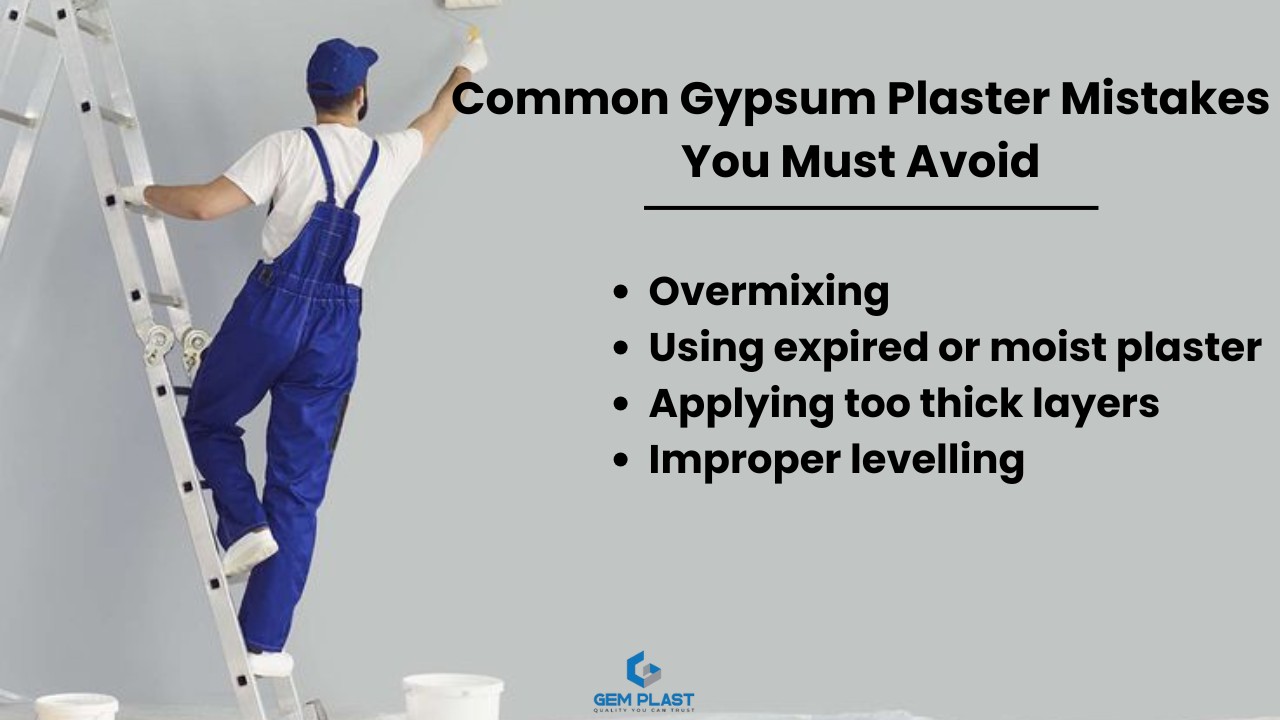
1. Overmixing
Long mixing of gypsum plaster may result in loss of strength and also poor setting quality. The experts think that mixing should be done only to the extent of getting a smooth paste. Overmixing of plaster creates a lot of air bubbles in it, which are harmful to the durability and finish of the plaster.
2. Using expired or moist plaster
When plaster that has expired or is moisture-affected is being applied, its bond capacity is diminished and also, and it sets improperly. While using dry plaster, always verify the manufacturing date and the bag’s storage conditions. Fresh and dry plaster provides the strongest and longest-lasting result.
3. Applying too thick layers
One of the most common mistakes people make when plastering is applying the plaster in very thick layers which can cause the plaster to crack, dry unevenly, and not stick properly. Professionals suggest that you should spread the plaster in thin, even layers if you want to keep the surface strong and of high quality across different types of plaster finishes. Plaster that has been applied in thin layers dries quickly and results in a smooth, beautiful finish.
4. Improper levelling
If the plaster is not levelled properly, bumps, waves, or uneven surfaces can occur. Always check the surface with the right tools, such as a straight edge or aluminium level, when the plaster is still soft. Well-done levelling always brings about a smooth and professional-looking finish.
Conclusion
Gypsum plaster is a great and reliable way to create walls that have a good finish and are strong and safe. If the material is applied correctly and mistakes that are usually made are prevented, then the result can be a clean and professional appearance. Gypsum plaster, which is simple to use and always gives good results, is still a favorite among builders and homeowners.
FAQ
1. Why is gypsum plaster better than cement plaster?
Gypsum plaster is better than cement plaster because it gives a smoother finish, dries faster, doesn’t crack easily, and needs no curing time. It also offers good insulation and natural fire resistance.
2. Are gypsum plaster walls safe ?
Yes, gypsum plaster walls are safe. Gypsum is a non-toxic, fire-resistant material that does not release harmful gases. It helps slow the spread of fire and creates a strong, healthy indoor environment when applied correctly.
3. How can I get the best gypsum plaster price near me?
Your content goes here. Edit or remove this text inline or in the module Content settings. You can also style every aspect of this content in the module Design settings and even apply custom CSS to this text in the module Advanced settings.
4. What is gypsum plastering work?
Gypsum plastering work is one of the processes where a thin layer of gypsum plaster is applied on the walls and ceiling. The work can be replaced with cement plaster and the result is a very smooth and crack-free finish. Gypsum plaster sets very fast, does not need wetting, and is ideal for painting.